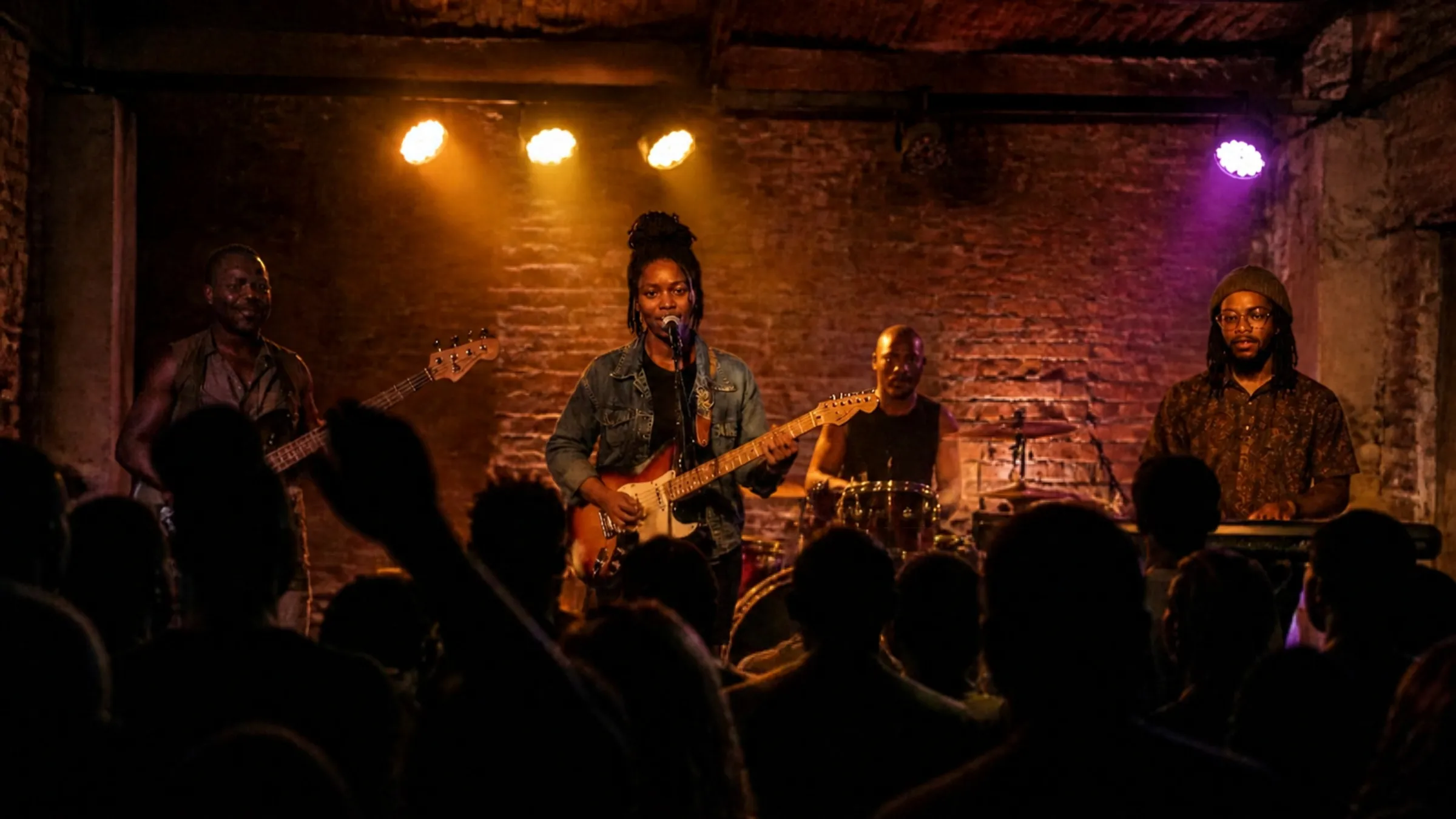
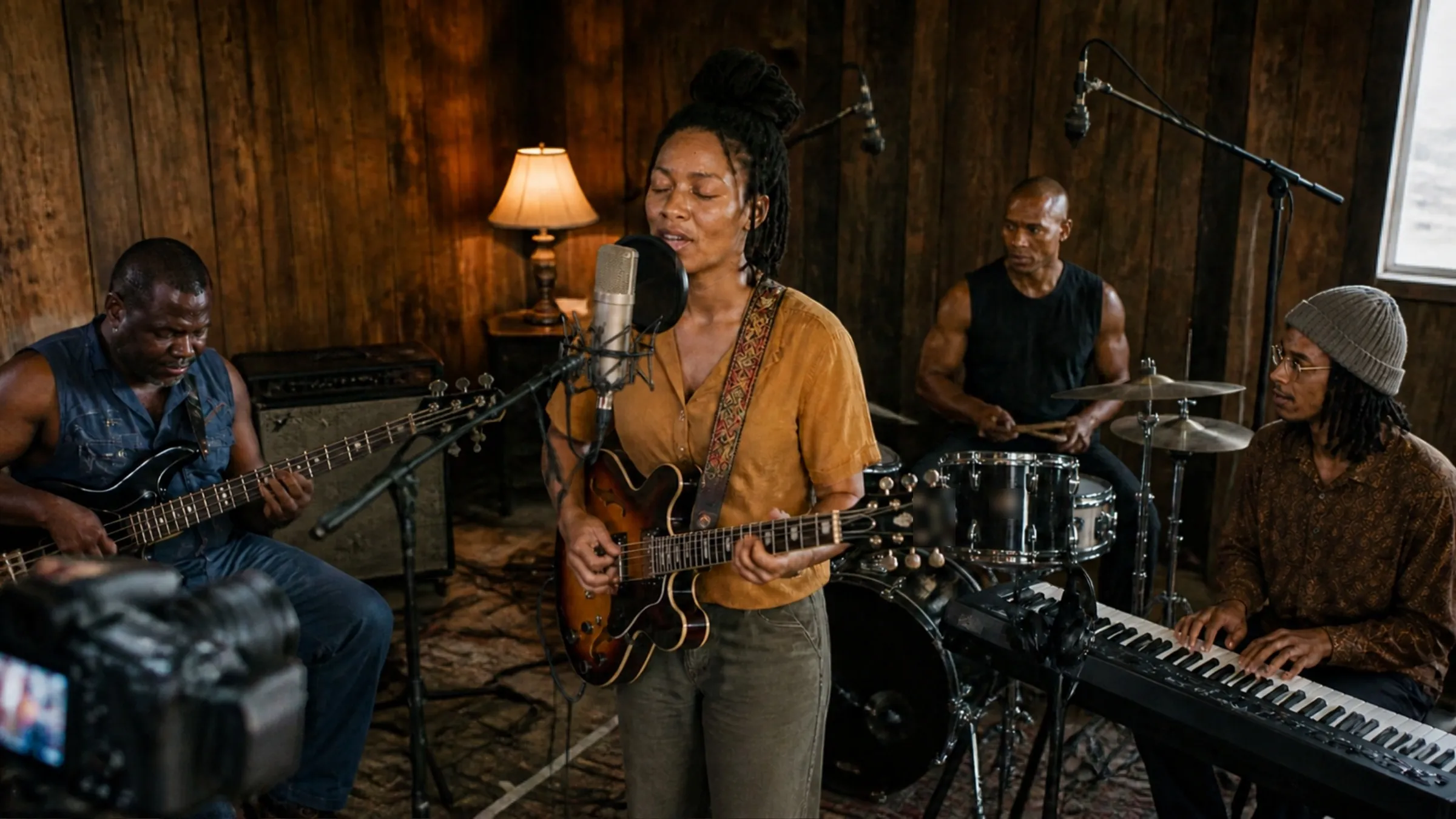
The Copper Hours performing in the Pineapple room, the singer centre, bass and keys either side, drums behind. AI-generated image.

PS-000 · Kitwe · Demo

The Copper Hours

A four-piece from the Copperbelt playing kalindula-rooted soul.

Watch the session

No film for this act yet.

Photograph: Photographer — name to come.

Planting the Crown

Where it began

Before there was a band, there was an hour. How four people from Kitwe found the time, the room and the borrowed guitar to start.

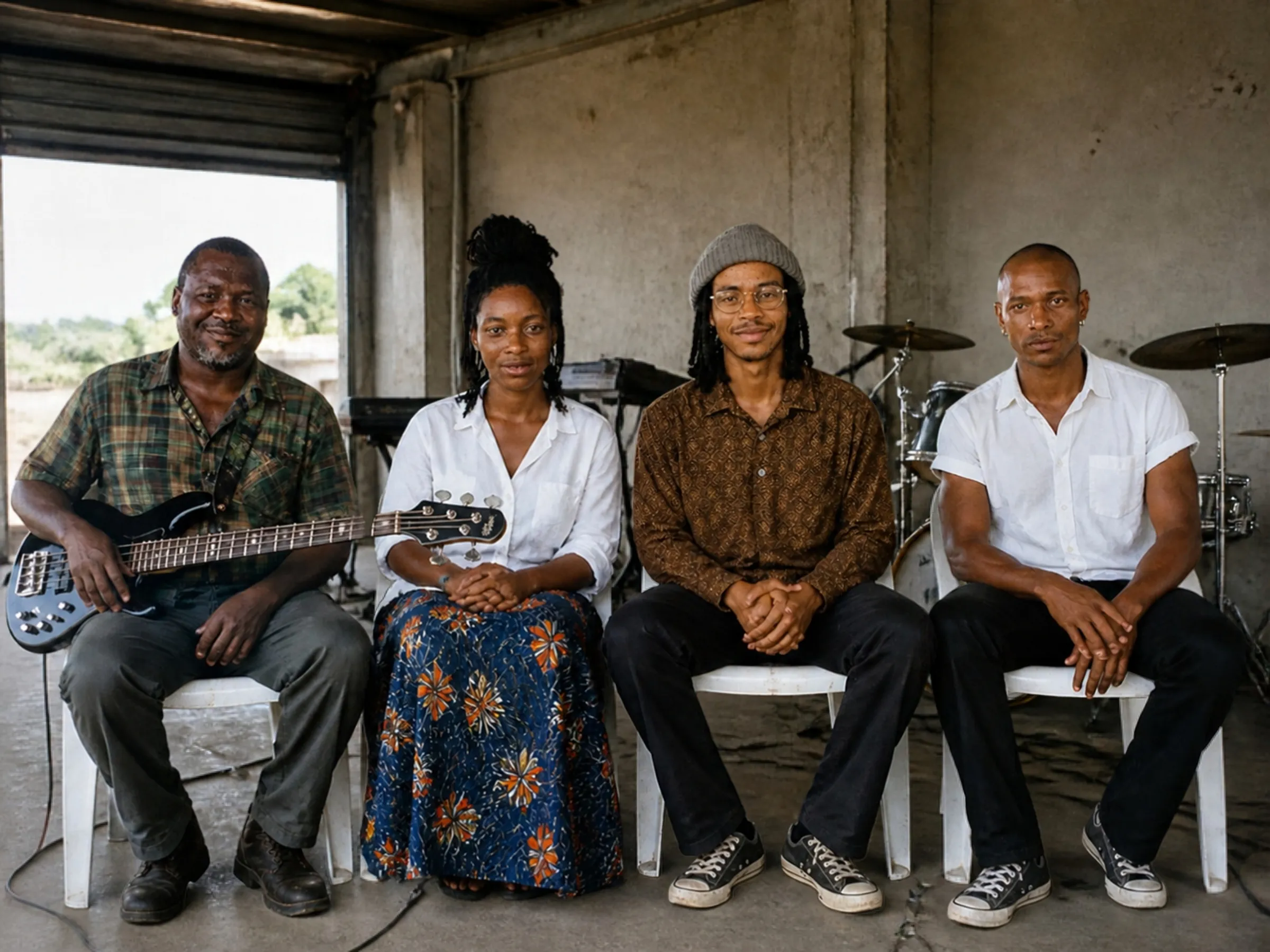
Four musicians seated on plastic chairs in a garage, a bass guitar across one lap, rain marks on the concrete behind them. AI-generated image.
The Copper Hours in the Chimwemwe garage where they rehearse. Photograph: Photographer — name to come.

The day shift ends and the town changes key. On the Copperbelt, there is an hour between the end of work and the start of everything else: buses fill, roadside braziers are lit, radios come on in yards up and down the street. The band took its name from that hour. “It was the only time all four of us were free,” the bassist says. “So it became the only time the band existed.”

The garage in Chimwemwe belongs to the keyboard player’s uncle. It holds a car on Sundays and a band the rest of the week. The roof is corrugated tin, and in the rainy season it decides the tempo. The first song they finished, “Slow Rain on Tin”, was written to fit around it. “We couldn’t play over the rain,” the singer says, “so we played under it.”

None of them grew up wanting to play soul. The bassist learned on kalindula records from a parent’s collection: songs built on a bass line that never stops moving, the kind that fills a wedding floor. The drummer came from church, where the job is to hold a congregation together for an hour without anyone noticing you. The singer wrote poems first and songs later. The keyboard player arrived last, with a secondhand keyboard missing two keys, and stayed because nobody else could play the parts.

What they had to learn first was patience with each other. Kalindula is fast and soul is slow, and nobody wanted to give way. For the first months, the bassist played as if the song were a dance and the singer sang as if it were a hymn, and the drummer tried to please both. “Everything was in the wrong place,” the drummer says. “We all knew the songs. We just weren’t playing them at the same time.”

They fixed it by slowing down. The bass kept its kalindula shape, the rolling, repeating figure that tells you where you are from, but played at half the speed, so the voice had room to stretch over it. The keys stopped filling every gap. The drums dropped the busy fills they had brought from church and kept only the downbeats that mattered. The sound that came out of that garage is recognisably Copperbelt, and recognisably something else.

“Mwaiseni” came next. In Bemba the word means “welcome”, the thing you say when someone comes to your door. The song is exactly that: an invitation sung at the gate, the bass walking up the path ahead of the voice. They sing it in Bemba first and English second, and they never translate it line for line. “Some things are said better in one language,” the singer says. “The other language just keeps it company.”

Then the guitar went back. For most of the band’s first year, every guitar part was played on an instrument borrowed from a neighbour. When the neighbour moved to Ndola, the guitar went too, and the singer had a week to learn the songs without it. “Borrowed Guitar” is what was left: a song about the gap, written on the keyboard with two dead keys, the guitar line hummed instead of played. When a new guitar came, they kept the hum.

There is a fourth song the band does not like to talk about yet. “Last Bus to Chimwemwe” is about the trip home from town after dark, the bus that comes or doesn’t. It is the longest song they have and the hardest to play, because it needs all four of them to hold back at once. They are still deciding how it ends.

Ask what they had to survive, and they do not talk about hardship. They talk about time. Every hour in the garage is an hour taken from something else: sleep, work, family, the next shift. A band that only exists for an hour a day has to decide, every day, that it still wants to exist. Four people have kept deciding that.

This story follows them out of the garage. The next chapter goes inside the private work: the rehearsals, the arguments over a single bar, and the choice that changed the sound.

Next: Rooting & Growth — The private work.
Rooting & Growth

The private work

Most of a band's life happens where no one is watching. Over six weeks, our photographer sat in on The Copper Hours' rehearsals in Chimwemwe: the set-up, the arguments, the long stretches of the same four bars. These pictures follow the work that turned a kalindula bass line into something slower, and the one decision the band says changed everything: letting the singer lead, and everyone else follow half a step behind. Photographs: Photographer — name to come.

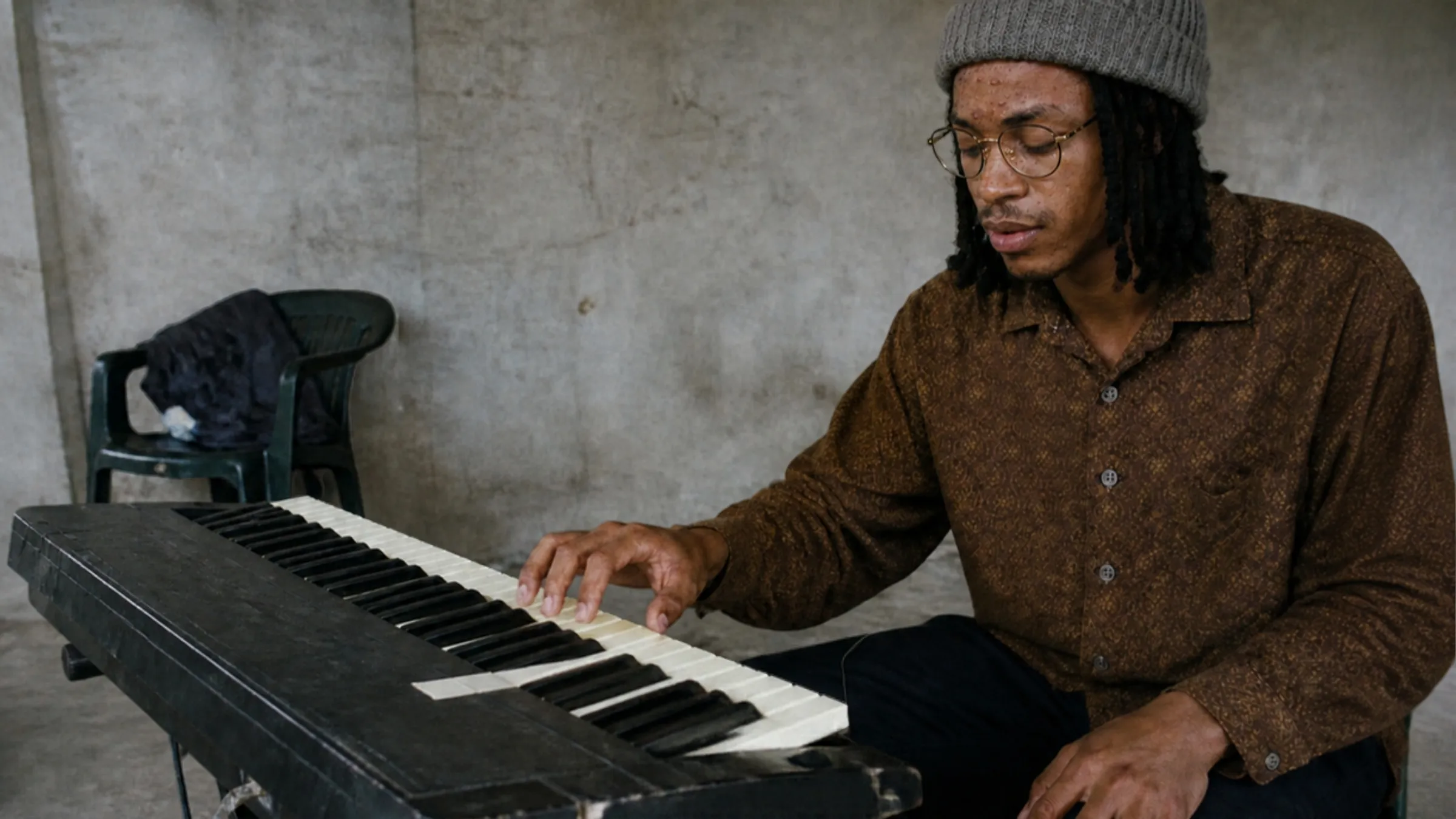
A man in a grey beanie, glasses and a brown patterned shirt plays a worn black keyboard in a bare concrete room, a plastic chair behind him. AI-generated image.
1. The keyboard with two dead keys. The band plays around them. Photograph: Photographer — name to come.
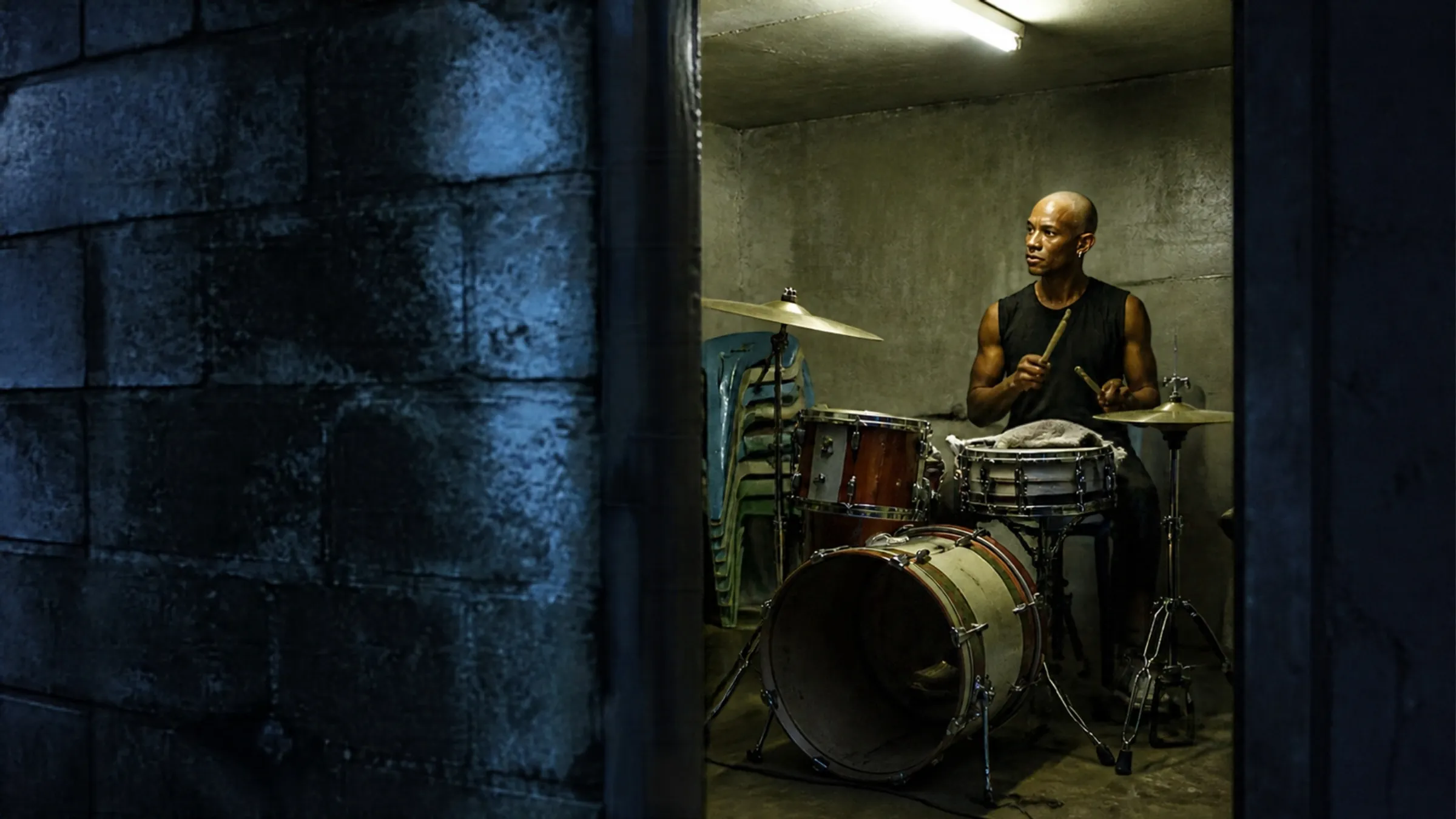
Seen through a doorway at night, a bald man in a black sleeveless top sits at a drum kit under a fluorescent tube, a cloth over the snare, stacked plastic chairs behind him. AI-generated image.
2. The drummer plays with towels over the snare. The neighbours have asked twice. Photograph: Photographer — name to come.
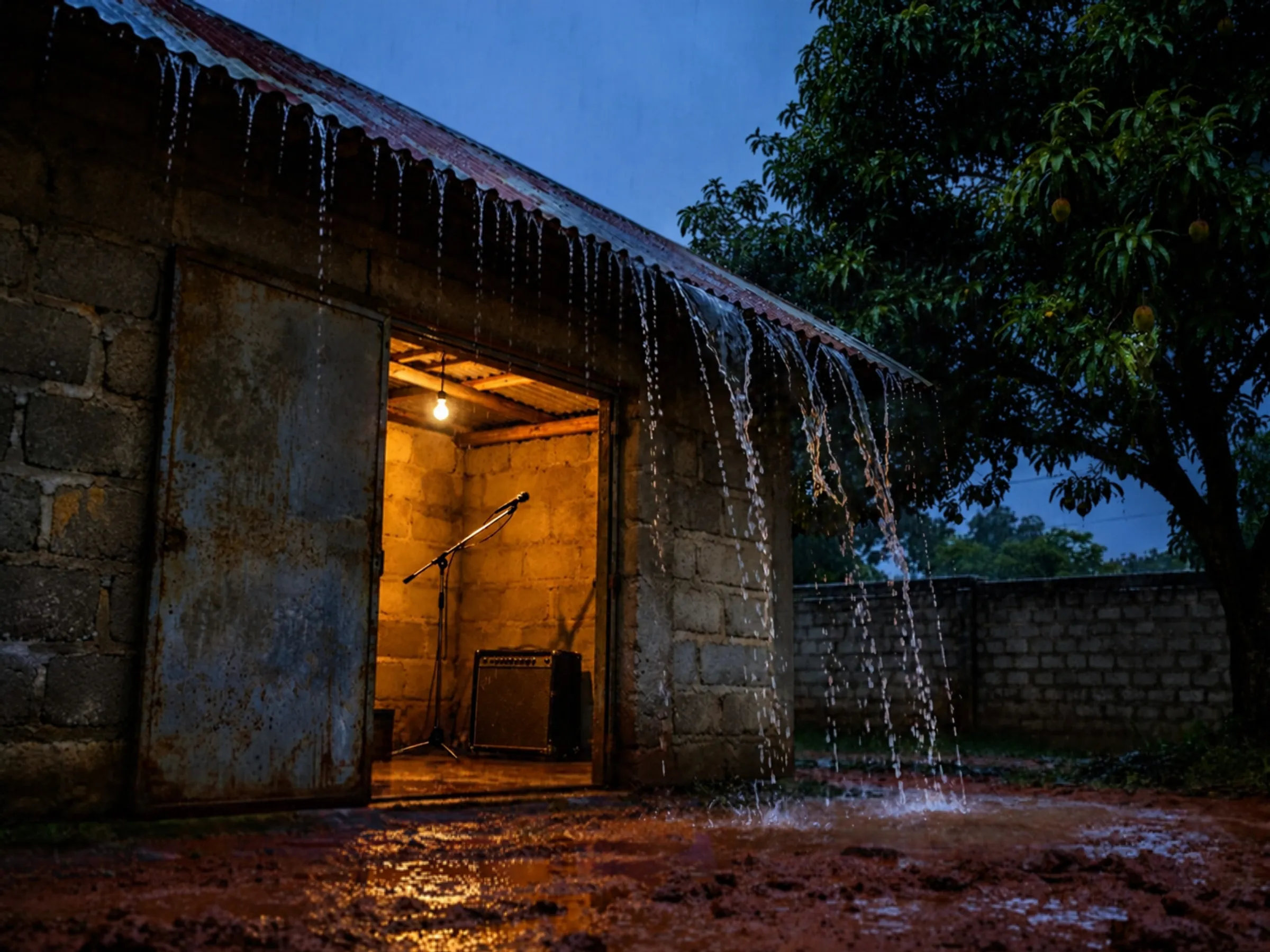
Rain pours off the corrugated tin roof of a block-built garage at dusk; inside, a lit bulb, a microphone stand and a small amplifier, with a mango tree to the right. AI-generated image.
3. Rain on the tin roof. Rehearsal pauses; nobody leaves. Photograph: Photographer — name to come.
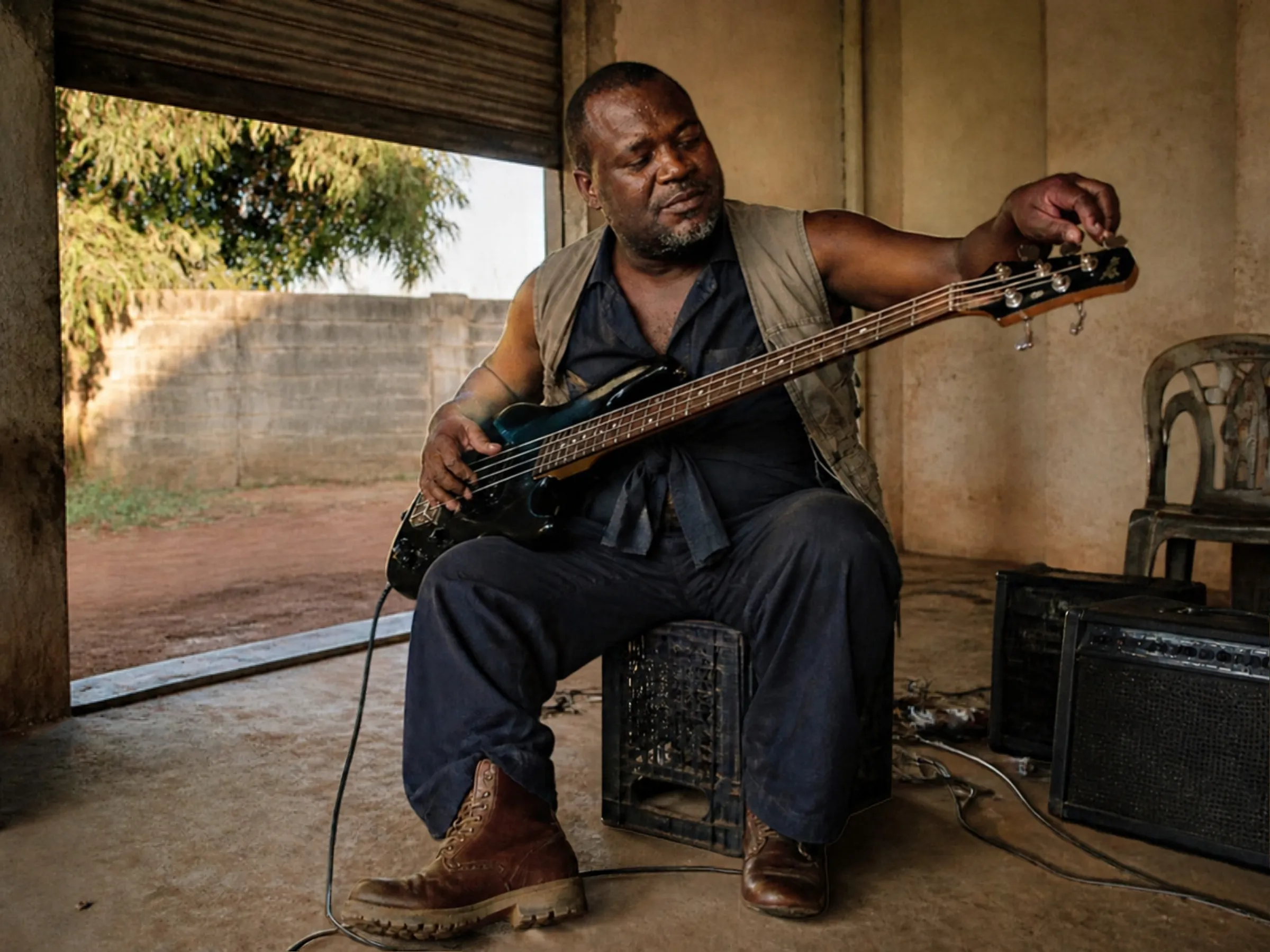
A man in a sleeveless vest, dark trousers and work boots sits on a crate tuning a bass guitar, amplifiers beside him and a half-open garage door behind. AI-generated image.
4. Five o'clock. The bassist arrives first, still in work boots, and tunes up while the garage door is half open to let the light in. Photograph: Photographer — name to come.

Process clips

  1. Half speedThe bassist plays the "Mwaiseni" line at kalindula speed, then at the band's speed, and explains what was lost and what was found.
  2. The dead keysHow a broken keyboard wrote the melody of "Borrowed Guitar".
  3. Under the rainA full take of "Slow Rain on Tin" with the storm still going on the roof.
The band seen from the back of a room, facing an audience in silhouette. AI-generated image.

Flowering · The breakthrough

The Copper Hours: Out of the Garage

Watch the documentary

No film for this act yet.

Photograph: Photographer — name to come.

For a year, The Copper Hours only played to the four walls of a garage in Chimwemwe. This documentary follows the band through the weeks before their first full performance with an audience: the songs they cut, the one they nearly dropped, and what happens when a sound built for a small room meets a big one. Filmed in Kitwe across the rainy season. In Bemba and English, with English subtitles. Can it hold a room? Directed by Director — name to come.

Ripening · The session

Who they are now

Four songs, recorded in one room. The garage sound, given space: kalindula bass at half speed, a voice that leads, keys and drums that wait their turn. The set moves from welcome to the last bus home, in Bemba and English. This is where the story has been heading. Listen to the whole thing. Recording method and number of takes: to be confirmed at the shoot.

  1. 01MwaiseniWelcome, sung at the gate. The first line is sung with no bass under it. The band comes in on the second.
  2. 02Slow Rain on TinWritten to fit around a storm. The drummer switches to brushes here. It was the closest they could get to rain indoors.
  3. 03Borrowed GuitarA song about an instrument that went back. Listen for the hummed line in the bridge. It used to be the guitar part.
  4. 04Last Bus to ChimwemweThe longest song, and the one they are still finishing. They have never played the ending the same way twice.

Heard in full. Now entering the archive.