
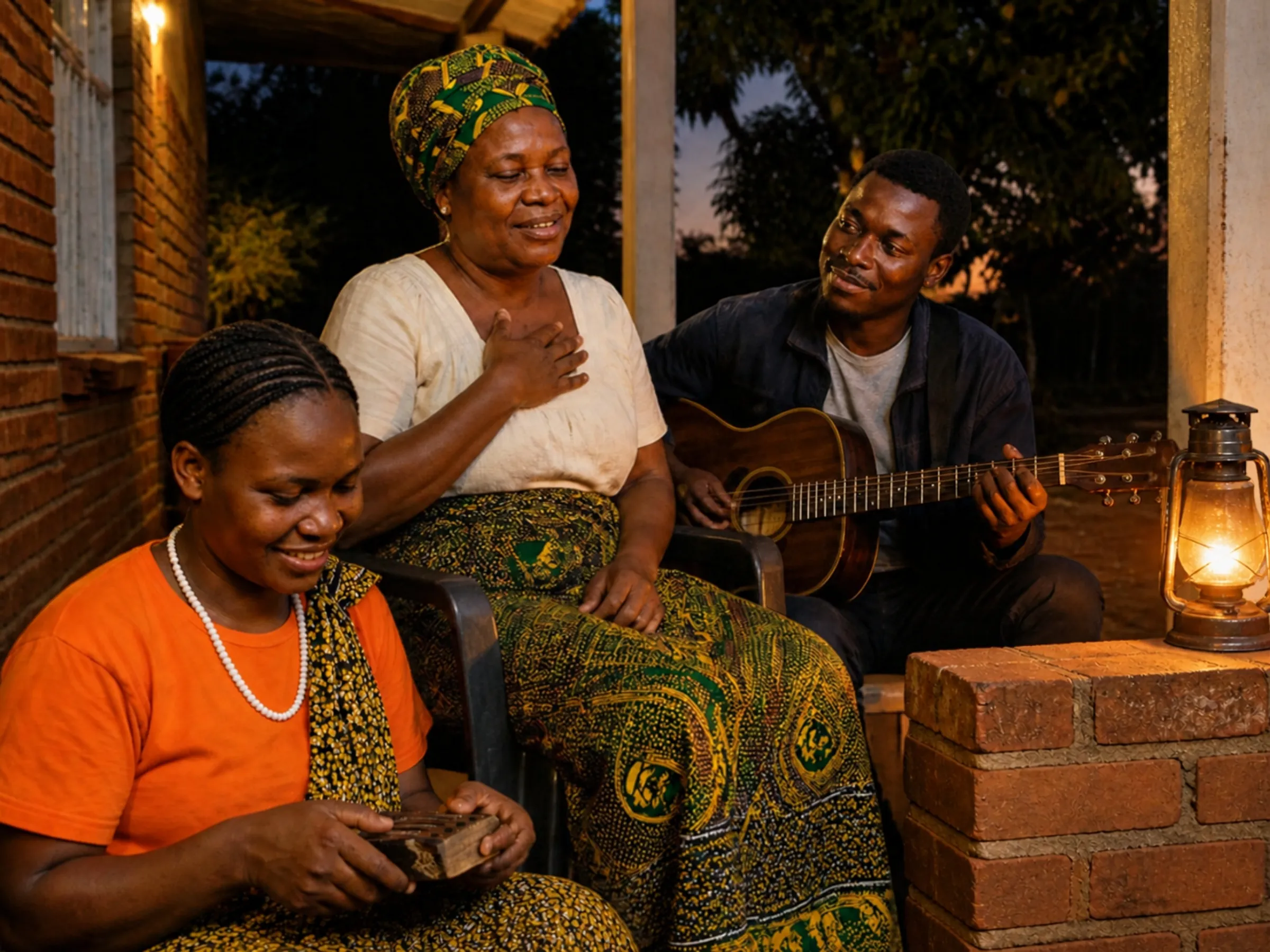
Everyone in the neighbourhood has heard the singer sing. Few of them have heard her sing for herself. For thirty years she has been the voice people send for: at a funeral, when no one else can start the hymn; at a wedding, when the hired band is late; at church, every Sunday, in the second row. She is a nurse at a clinic in Solwezi. Singing, she says, was never a job. “It was just the thing I could give.”
Her son found out how good she was by accident. He was learning his late father’s guitar on the veranda, and she started singing along from the kitchen in Kaonde, a song from her village that he had never heard. He stopped playing to listen. Then he started again, and tried to follow her.
The guitar is older than her son. His father bought it secondhand in Lubumbashi and played it at family gatherings until he died. Two of its tuning pegs do not match. Her son learned on it by watching his father’s hands in old phone videos, slowed down.
The third member came over the fence. Their neighbour plays a thumb piano she was given as a girl. One evening she brought it to the veranda, sat on the step and joined in. She has been coming every evening since. The thumb piano cannot be retuned easily, so everything else had to change to fit it. Her son tuned the guitar down, and the singer moved her songs to meet them both.
They named themselves after the road. Kasempa Road runs west out of Solwezi, past the mine trucks and the charcoal sellers, through the miombo woodland to the village where the singer was born. Most of her songs are about that journey: leaving, coming back, the people waiting at either end.
None of them planned to be a band. They planned to sing on the veranda. This story follows what happened when other people started stopping at the fence to listen. The next chapter goes onto the veranda, into the evenings of practice, and the choice that changed the songs.
Next: Rooting & Growth — The private work.